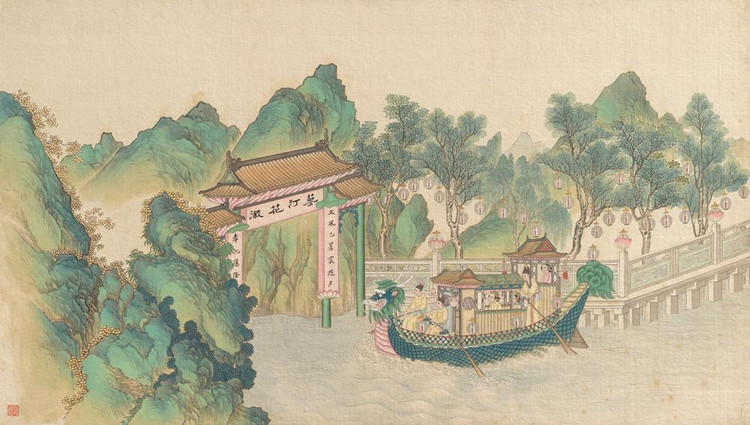
When it comes to stories inspired by historical settings, I’m always eager to know more about the real places/people behind them. What real places inspired the impossibly spectacular Daguanyuan (the Grand View Garden) in the classic Chinese novel Dream of the Red Chamber? Who was Mary Boleyn, the sister who inspired The Other Boleyn Girl, and what was life really like in 16th century England for a woman?

My Uncanny novelette, “Another Girl Under the Iron Bell” takes place in a reimagined Edo Era Japan, melding fact and folklore components from the 17th through 19th centuries, so I’m doing something a little different for a story about a story this time: I’m diving into Nine Things That Inspired The Story. Come take a stroll with me through ancient poems, the oldest sake brewery in the world, and a 200+ year old inn as I try my best museum curator impression. (If you haven’t read the story yet, there are spoilers ahead!)
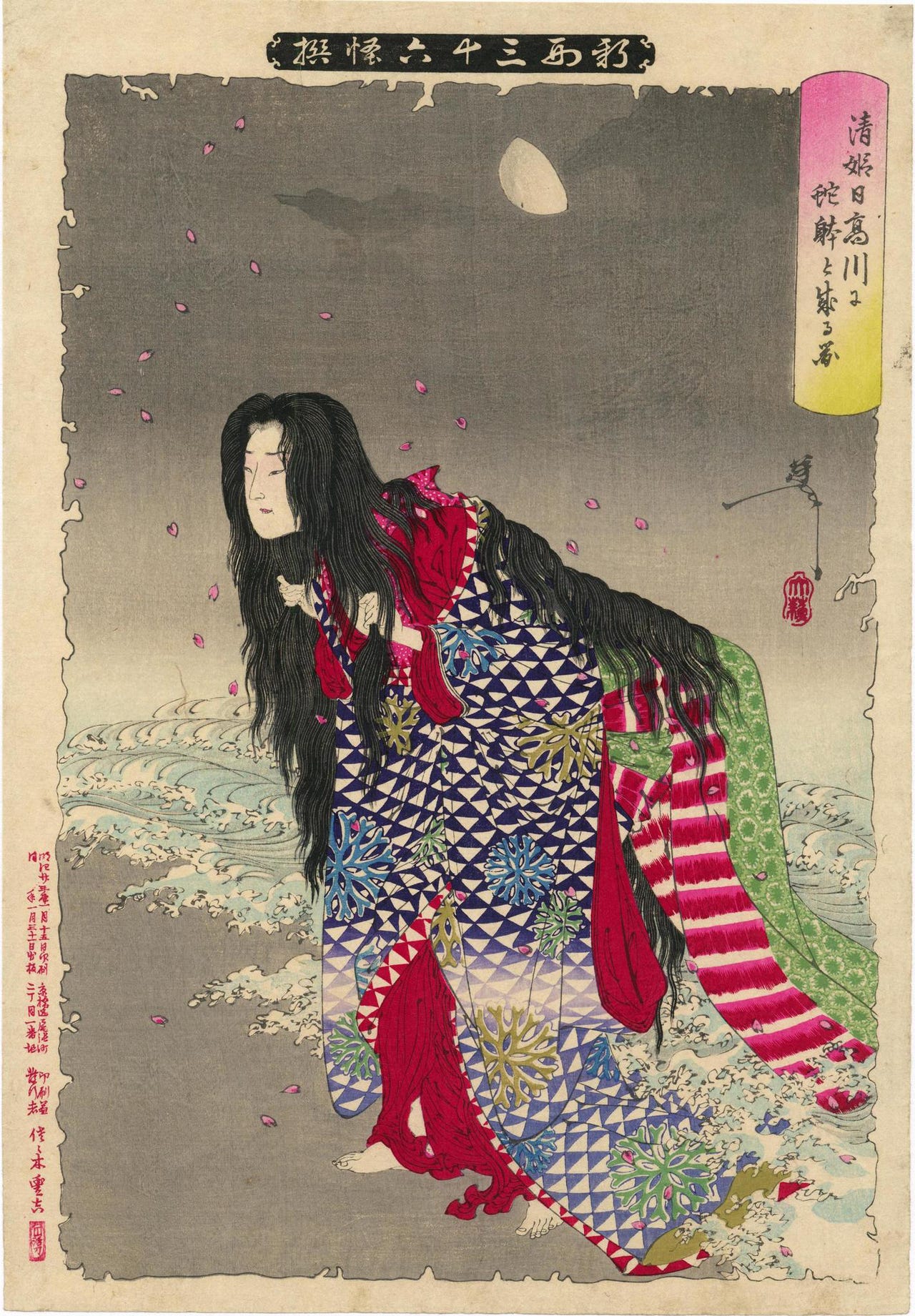
1. The story is inspired by the yokai legend of Kiyohime. One of the oldest versions of this story is found in the Miraculous Tales of the Lotus Sutra from Japan, a collection of tales from the 11th century written by the monk Chingen intended to promote the Lotus Sutra (a Buddhist scripture), but eventually took on a life of its own, spawning countless retellings and prints over the centuries. One of the most famous is the print below by Yoshitoshi Tsukioka from his 36 Ghosts and Strange Apparitions series.
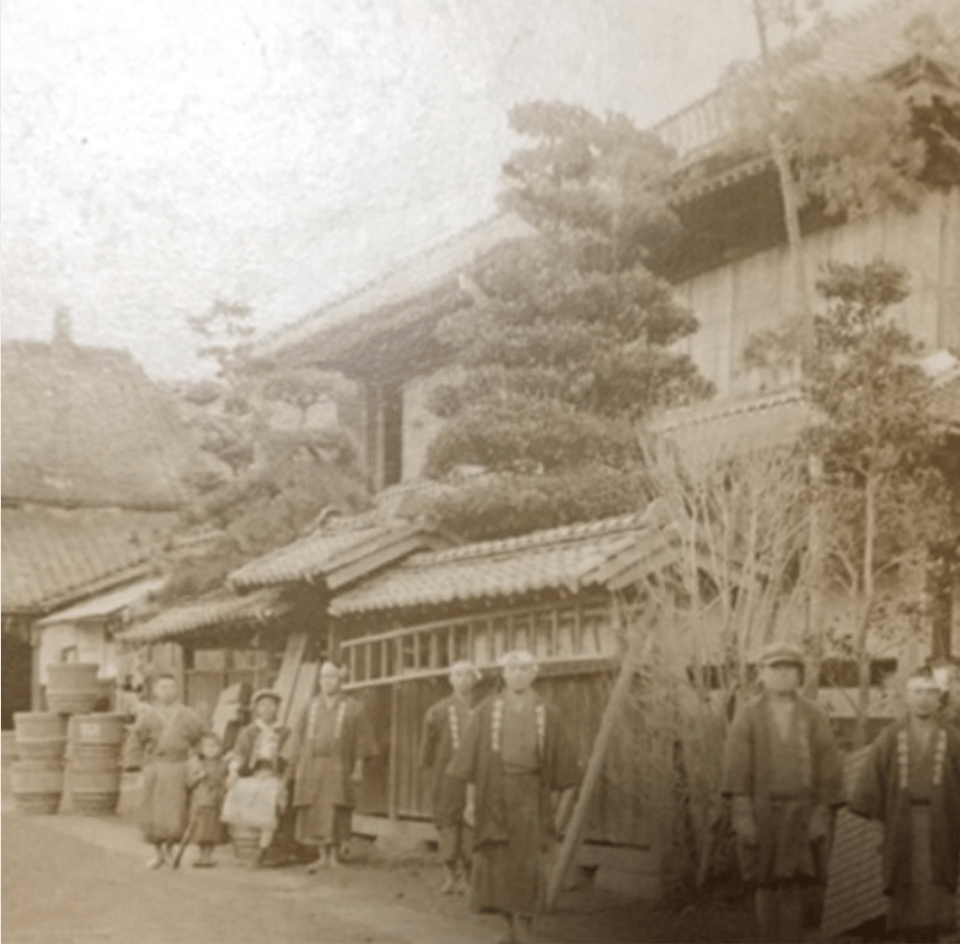
2. Kiyo orders Ryunosuke to bring her some good sake, and he brings Sudo Honke. Founded in 1141, Sudo Honke is one of the oldest companies in the world and the oldest sake brewery in Japan, still operating (located in Ibaraki prefecture). The original company founders were samurai tasked with helping to “revitalize the economy,” so they started a brewery.
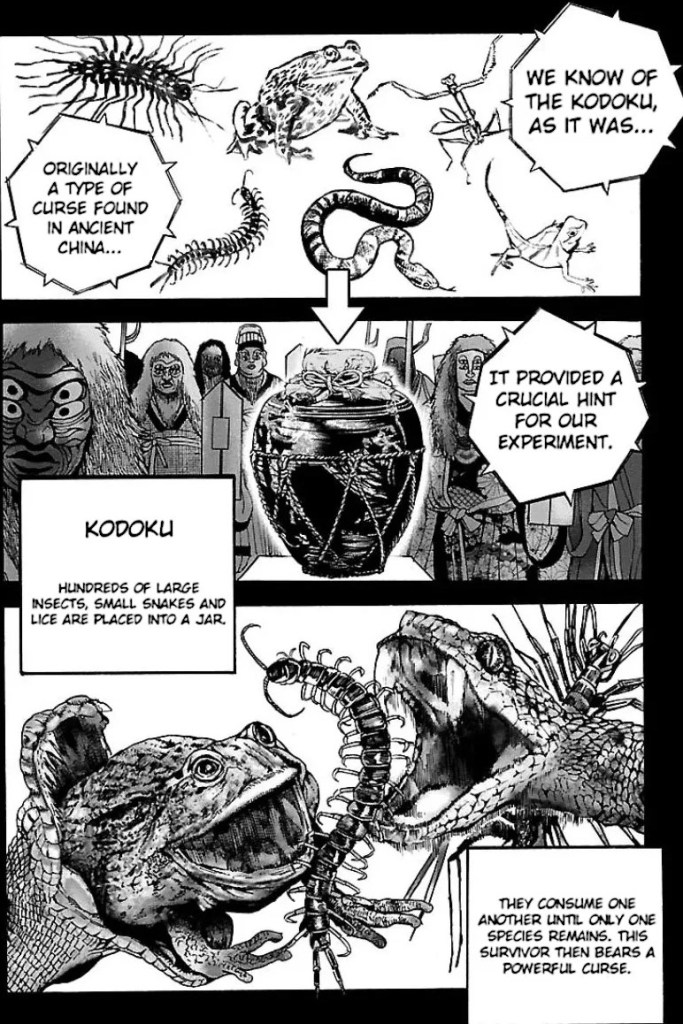
3. The cursed jar Kiyo makes is based off kodoku, which is created by gathering several insects and small creatures in a single jar and waiting to see which one survives. It originates from gu, a Chinese poison magic which dates back to as early as the 7th century. (For all my anime fans, Sukuna bathes in a kodoku-like liquid to strengthen his body and control Fushiguro)
4. The bathhouse that Kiyo and Arata hide out at is inspired by Matsushiroya, a 200+ year old inn I stayed at in the post town Tsumago (along the Nakasendo route) where they serve soy and mirin-braised giant koi fish.

5. The cursed sword/blade that Kiyo gets from Akechi is inspired by this 18th century short sword scabbard with cicada, snail, and snake ornaments by Shigetake that I saw at a special exhibit in the Metropolitan Museum of Art.

6. The kokyu (which Arata plays at the inn) is a traditional 3-stringed (sometimes 4-stringed) Japanese instrument similar to the shamisen, and the kanji characters for it literally mean “barbarian bow.” Here’s a badass performance of it with koto accompaniment.
7. The lullaby that the cursed serpent half-sings while transforming is inspired by “Lullaby of Takeda,” a famous Japanese folk song originating in the burakumin communities of Japan (an outcast “caste,” established in the 1600s, consisting of people with occupations related to death e.g. butchers, tanners, executioners, etc.).
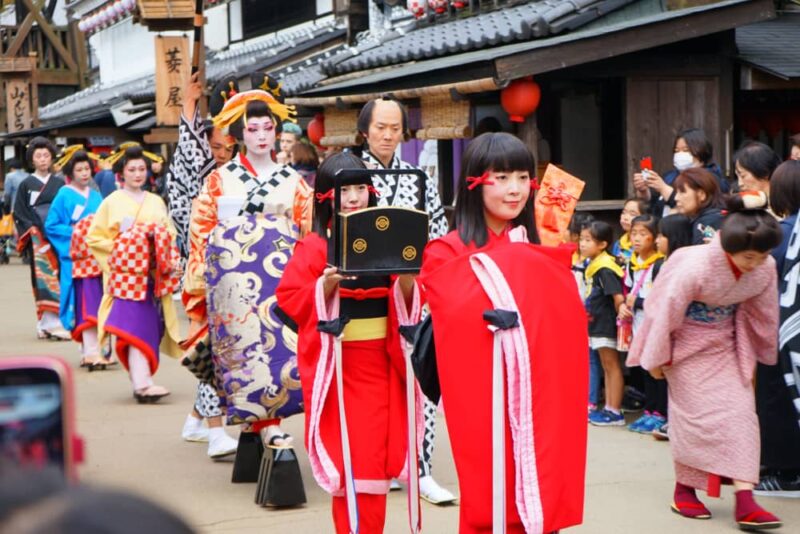
8. Kiyo met Ryunosuke when she worked in Yoshiwara, once called the “floating world” and one of the three licensed red-light districts (and the most famous) during the Edo Period in Japan. The Oiran procession that Kiyo watches from a window (while waiting for Ryunosuke) took place in each of the three licensed red districts during the Edo Period in Japan and was an opportunity for the most popular courtesans to show off. There are “modern” recreations of the Oiran Dochu Procession held throughout the year in Japan during certain festivals (e.g. the Ichiyo Sakura Festival in Asakusa, Tokyo in April) and at Edo Wonderland theme park.
9. The image of Ryunosuke leaving Kiyo’s room at dawn was partially inspired by this swoon-worthy poem written more than 1000 years ago by one of the Heian Period greats, Ono no Komachi (825AD – 900AD).

Thanks for reading!
 Angela Liu
Leave a comment