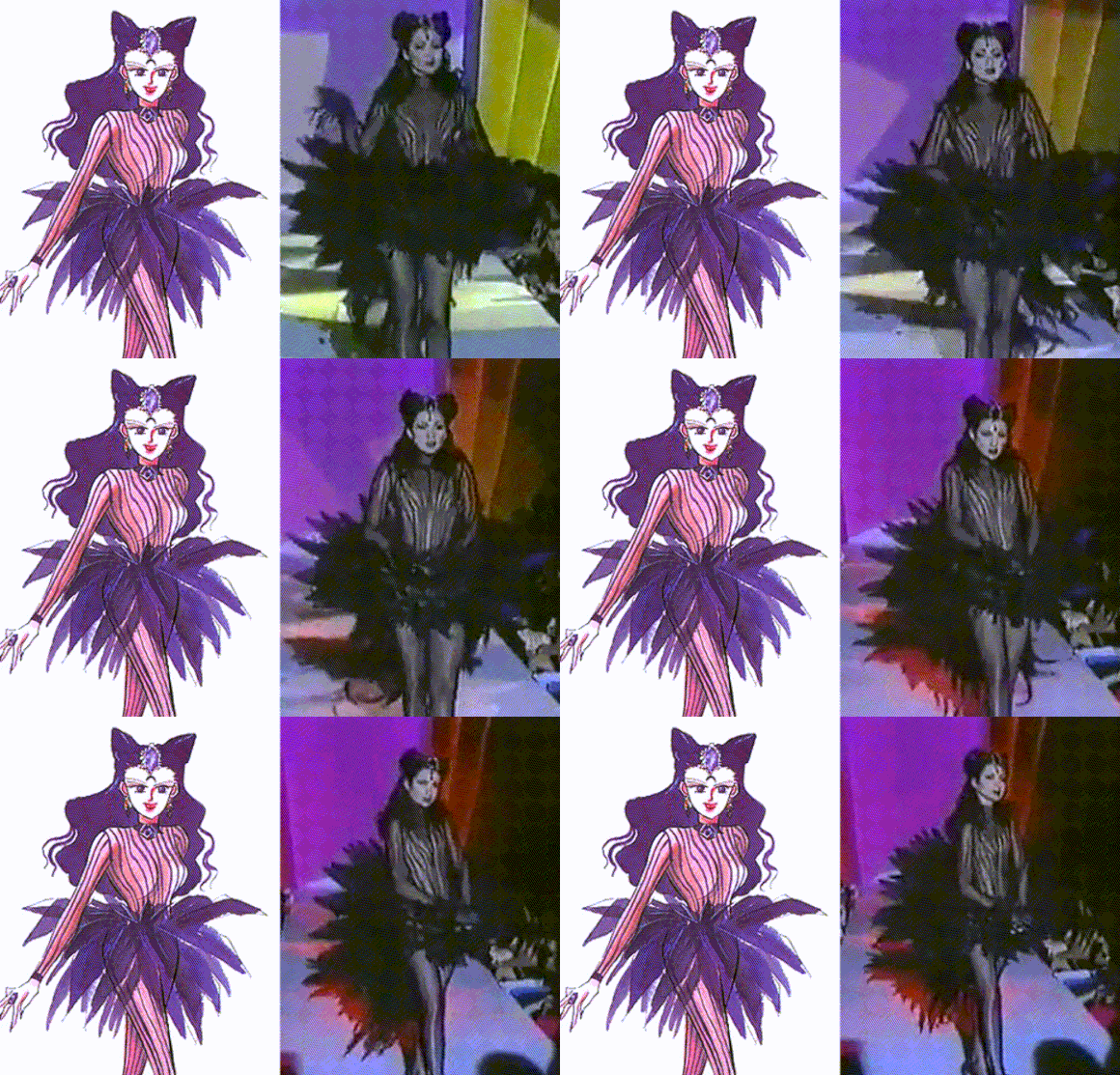
I’ve always been obsessed with Behind-The-Scenes looks at my favorite stories, from books to movies to comics. It’s so interesting knowing that Akira Toriyama had no intention of writing a fighting series when he started Dragon Ball (he was encouraged by his editor to go in this direction) or how Naoko Takeuchi was an avid fan of haute-couture and based many of the outfits (of both sailor senshi and enemies) on high fashion designs she saw. Behind every story is another story that serves as both a snapshot of a time period and the life of the author who wrote it.
So every month in my newsletter, I’d like to give a Behind-The-Scenes (inspirations, writing process and all) look at one of the stories or poems I’ve written. For this first month, I chose my Nebula-nominated novelette, published in Clarkesworld #201.
“Imagine: Purple-Haired Girl Shooting Down The Moon” started off just like it did in the story: as a ridiculous visual prompt. In the summer of 2022, my husband, who is a programmer, asked if I wanted to try out a new service he’d recently found called Midjourney that had just gone into open beta. This was back when the Midjourney Discord channel was still manageably small, still mostly free of corporate users looking to save a buck, and the two of us spent hours just trying out different prompts to see what kind of things we could generate. Here are the results from two of the earliest prompts I put in.


We stopped experimenting with the service soon after, and months later, the escalation in copyright-infringing AI art became a major problem in almost all industries, creating huge ethical concerns among artists. This is what led me to begin writing the story. This question of what do we value more, the artist or the art? What becomes of art in a world where people stop caring what is real? What becomes of history/memory and how we view reality itself? There was something uniquely horrific about constantly checking pictures for discrepancies in fingers and teeth to make sure they were real.
In truth, Purple-Haired Girl started off as a very different story. It was more horror-leaning and the image of the “purple-haired girl” had a significantly more sinister origin. Mina/Tina was just a minor character and the story focused more on the mystery of who the purple-haired girl was and the narrator’s growing obsession with finding her. There were nightmarish nightclubs, dead astronauts, and generally more unhinged behavior. After writing the few pages, though, I found myself falling deeper into the world, the black market for NC-orbs*, and the artists forced to create them. I found myself thinking of the sweatshops I’d often spent hours in as a kid, the suffocating steam, of the friends and family that worked themselves to near-death in them (often getting seriously injured) for someone else’s bottom line, and that’s when I started to see the story in its current shape. This was never intended as a dystopian story so much as a reflection of an analogous past onto a possible future. I’ve been told multiple times that this story would have been better if there had been a happier/more optimistic ending. I genuinely believe that this would have undermined where this story had come from. Not every story about grim realities, desperation, and the awful way people can treat each other is “just another” dystopia–there is truth in the misery, and I didn’t want to dismiss that so easily.
For those interested in rejectomancy, “Imagine: Purple-Haired Girl Shooting Down The Moon” is the only story of mine that sold at the first place I submitted it to. Novelettes can be a hard sell with very few paying markets that take stories of that length and are open all year long, so it was an immense relief that the story found a home quickly.** The only person who read it before submission was a good friend from college who is not a writer.*** The story was published less than a month after getting accepted (with a few quick rounds of editing). Clarkesworld remains one of my favorite venues when it comes to editing. Neil Clarke is fast and never overly instructional. He points out areas that need clarification and never tries to rewrite an author’s voice.
This story is also the one that taught me the dangers of reading reviews because out of all my stories, it has been the most polarizing. The one review that has stayed with me the longest is the one that called this story “so relentlessly grim it flirts with absurdity.”
Be more absurd, friends. Tell your truths.
(For more stories about my writing/editing/submission process, please sign up for my newsletter where you can also get my latest updates and all my fiction/poetry/anime recommendations).
* The “Name Change” concept (which inspired the NC-orbs) is something I’ve been writing about for over a decade and is at the center of my story “You Will Be You Again,” which is set to come out at Interzone Digital soon.
** If you’re looking to sell a novelette, Fusion Fragment is another great sci-fi market with a fast turnaround that’s open all-year long now.
*** Side note: I rarely exchange critiques, mostly because I read too slowly and hate making people wait, so editing is often a never-ending nightmare of self-doubt. Solidarity with all writers who also struggle through writing with little to no feedback due to social anxiety or other factors.
 Angela Liu
Leave a comment